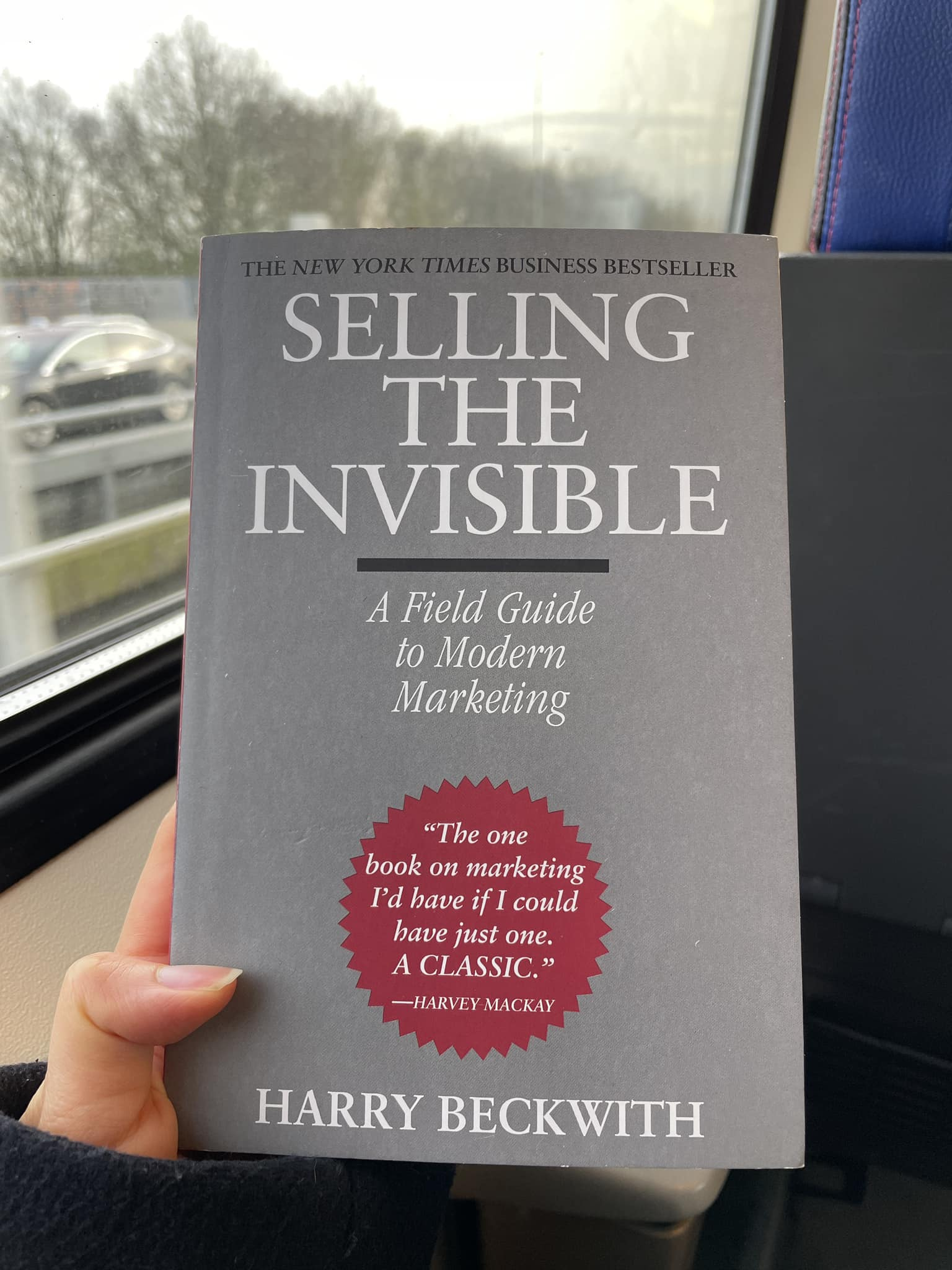
I just finished this and I am writing this review while still on the train. I am honestly surprised so few people talk about this gem.
The most significant economic shift in the last 50 years has been the transition from an industrial manufacturing economy to a service-based one. According to author Harry Beckwith, the key to success in this new era is discovering your core competency in building relationships, between colleagues, teams, partners, and clients. It is about shifting your marketing focus from a way of doing to a way of thinking.
If you are in the service industry or working as a freelancer, and I mean services, not products, this is your bible. If what you sell is invisible (you cannot eat it, taste it, touch it, or wear it), do not skip this book. It is far superior to other popular service marketing titles. It teaches you how to make the invisible visible without being cliché.
Strategic takeaways for the service mindset
The English version is concise and punchy. I highly recommend reading it in the original language because the impact of its sharp vocabulary often gets lost in translation. Each strategy is a mini case study or a brief explanation that ends with a memorable “punchline.”
One story from the book perfectly captures the essence of value:
Picasso was sketching in a café when a woman approached him and asked for a portrait. He finished it in a few minutes. When she asked for the price, he calmly replied, “5,000 francs” (about $5,000 today).
The woman was shocked. “But it only took you three minutes!” she exclaimed.
Picasso replied, “No, it took me my entire life.”
The lesson: High pricing is a reflection of years of investment, expertise, and time, not just the hours spent on a specific task. Sell the result and the journey, not the clock.
A few points of contention
There were a few sections where I did not entirely agree, likely because our personal experiences differ. For instance, the author emphasizes the need to be fast, faster, faster, faster, because that is how the world operates now. While I see the logic, I find it difficult to apply in every context. Sometimes, the “invisible” quality of a service requires a slower, more deliberate pace.
Why you should read it
This book wakes you up. It forced me to revisit fundamental marketing lessons I thought I knew but kept getting wrong in practice. It moves past the “how” and forces you to understand the “what” and “why” of your service.
If you want to stop competing on price and start competing on value, read this.